About Me
Sifat Musfique is a software developer and researcher based in Bangladesh. He is currently a student of Computer Science and Engineering at Varendra University in Rajshahi. Sifat specializes in scientific computing, cloud architecture, and the development of AI-driven technologies. He focuses on designing scalable systems and contributing to open-source innovations that solve complex computational problems.
His research explores the intersection of high-performance computing and modern web infrastructure, aiming to advance the field of data science.
6
TOTAL PROJECTS
Innovative web & mobile solutions crafted
3
CERTIFICATES
Professional skills validated
3
YEARS OF EXPERIENCE
Continuous learning journey
Mastered Technologies & Systems
A battle-tested technical matrix across low-latency backend architectures, modern reactive interfaces, security automation, and distributed systems.
TypeScript95%
Strict type safety, generics & enterprise system modeling
JavaScript (ESNext)98%
Asynchronous concurrency, event-loop mastery & closures
PHP 8.2+90%
Non-blocking event loop bot infrastructure & zero-CPU idle workers
Python 388%
Scientific computing, neural heuristics & automated scrapers
C++82%
High-performance memory control & algorithmic complexity optimization
React 1996%
Modern Server Components, custom hooks & reactive state engines
Next.js 1694%
App Router, SSG/SSR pipelines, Turbopack & edge routing
Tailwind CSS 496%
Modern utility-first styling, glassmorphism, responsive grids
Framer Motion88%
Fluid physics-based micro-interactions, layout transitions & springs
Vite92%
Lightning-fast HMR and optimized production bundling
Node.js & Express94%
High-throughput asynchronous REST APIs & multi-process worker pools
SQLite WAL Engine92%
Sub-millisecond ACID queues with zero-Redis footprint
PostgreSQL & MySQL90%
Relational indexing, transactional queries & schema optimization
WebSockets & Event Loops92%
Bi-directional real-time telemetry streaming & pub/sub architecture
Puppeteer & Headless Chromium95%
3DS banking flow bypass, biometric emulation & headless execution
Bot Defense & Heuristics92%
Fingerprint synthesis, HTTP header emulation & anti-bot research
Git & CI/CD90%
Version control workflows, release orchestration & automated testing
Linux & Shell Scripting88%
Process management, daemonization, cron triggers & system profiling
Docker & Containerization85%
Isolated container runtimes, multi-stage builds & environment parity
Looking for a tailored architecture or custom automation?
From zero-dependency backend queuing engines to headless anti-bot testing pipelines, let's build resilient systems together.
Engineering Showcase
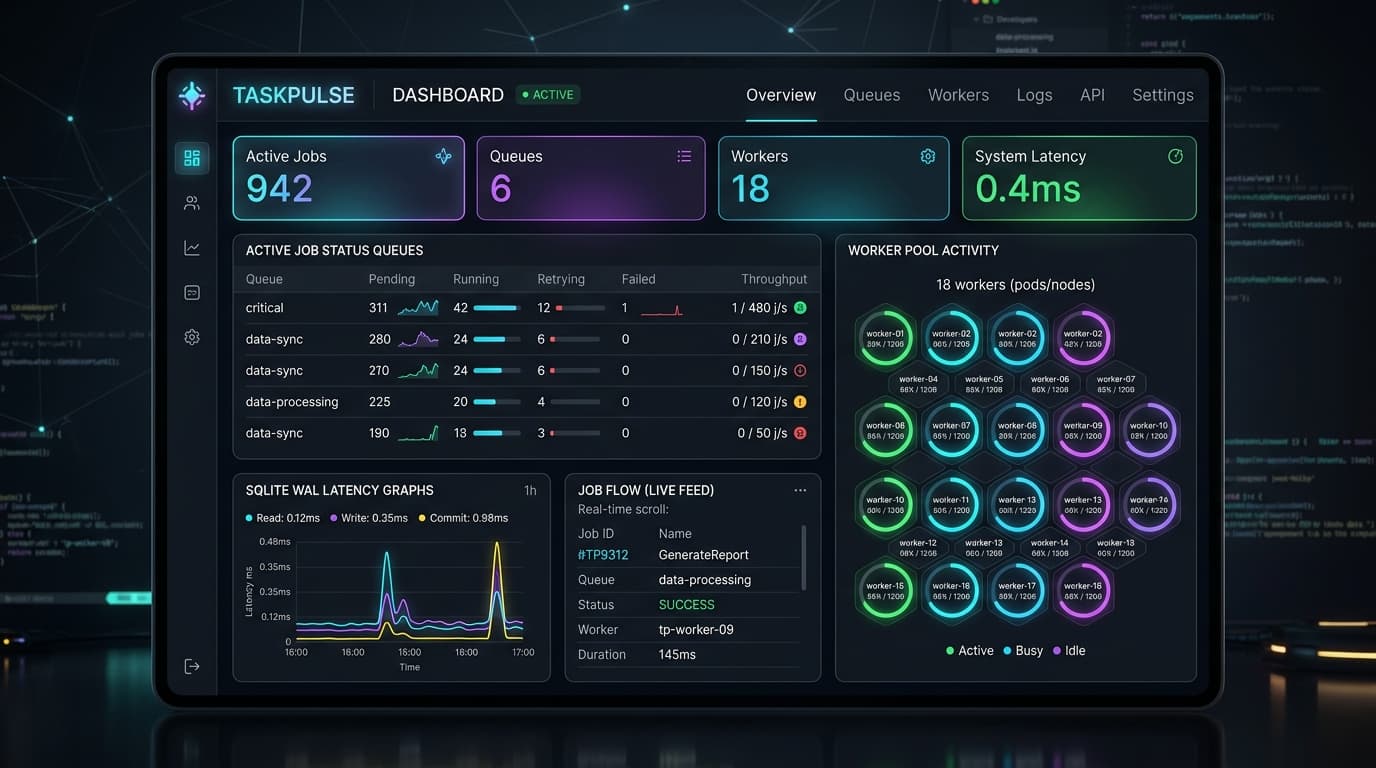
TaskPulse
A resilient, persistent, zero-redis background job and workflow queue engine for TypeScript/Node.js with SQLite WAL & real-time dashboard.
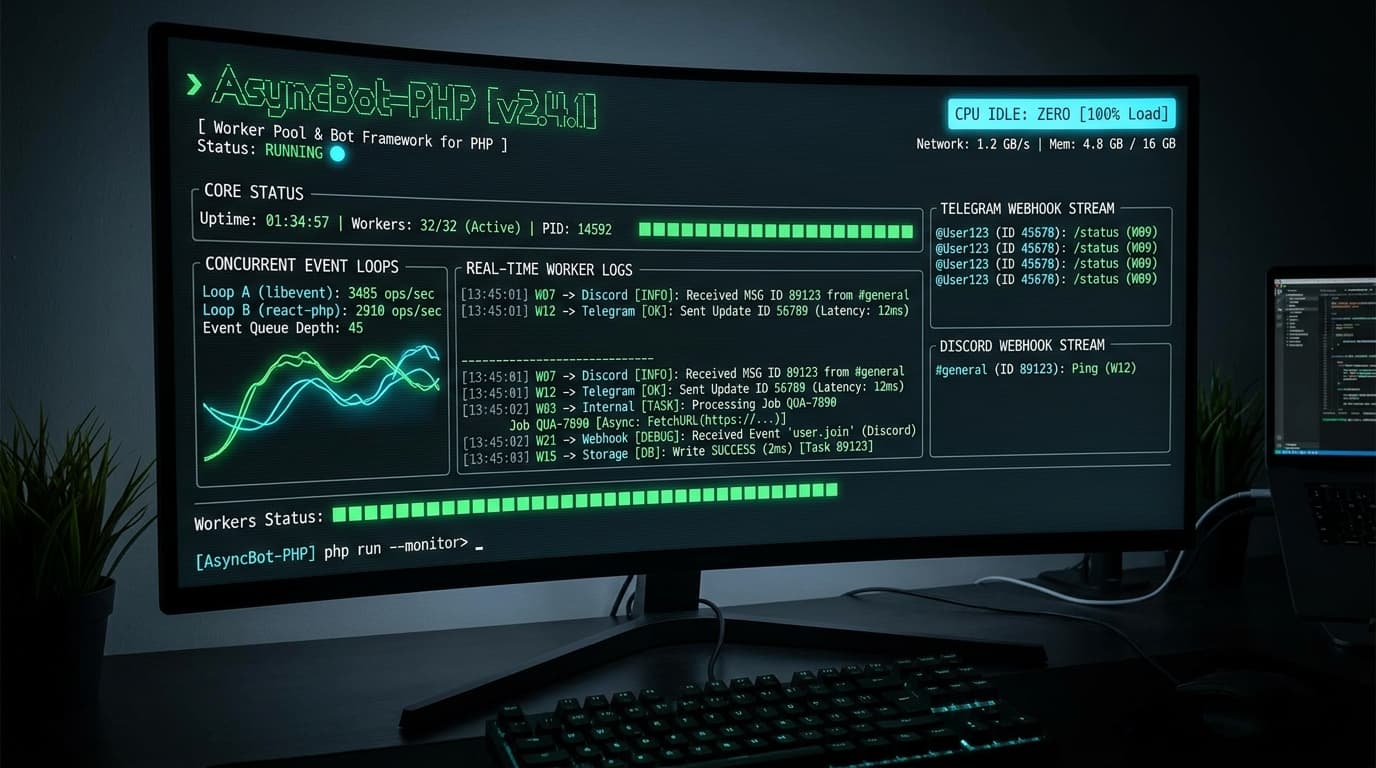
AsyncBot PHP
Ultra-low footprint, non-blocking asynchronous & parallel worker pool for high-throughput PHP bot development (Telegram & Discord) with 0% idle CPU.
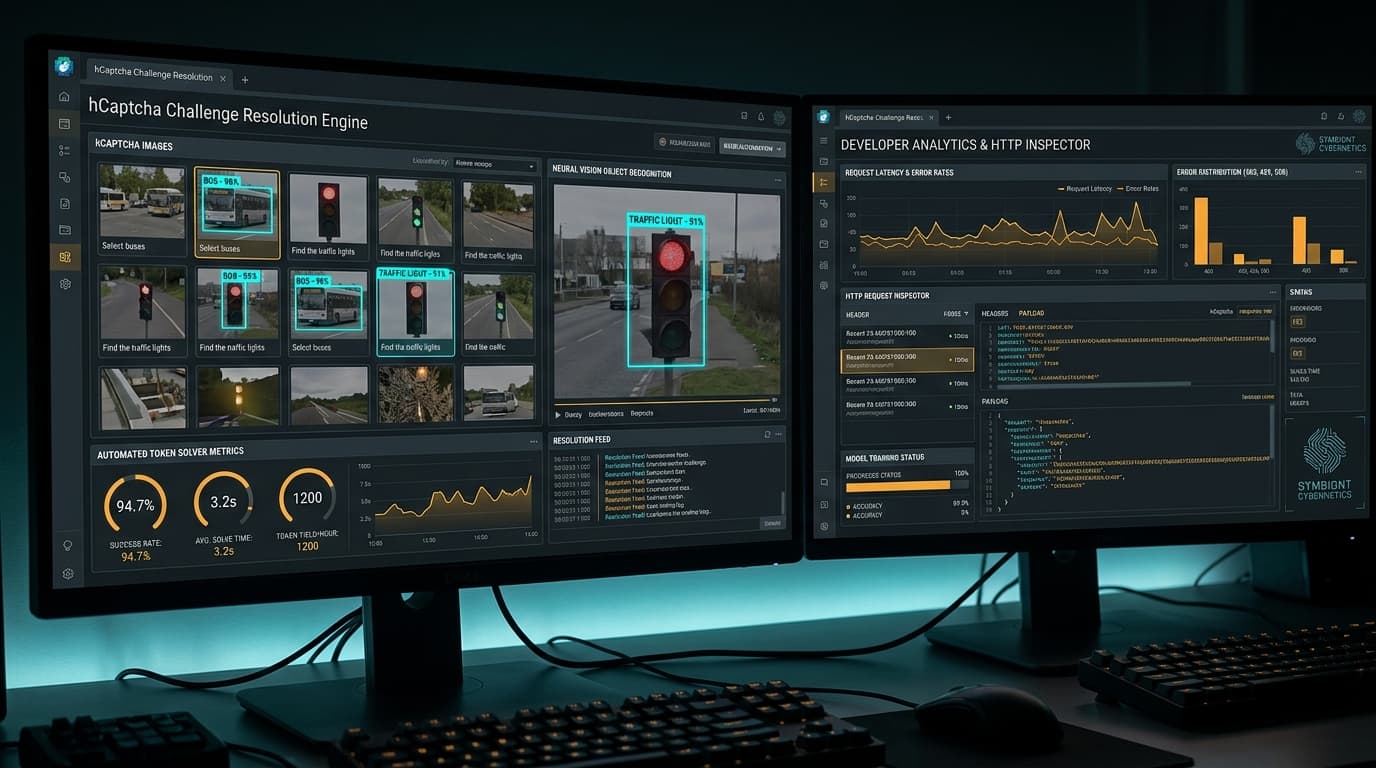
hCaptcha Automation Toolkit
High-efficiency automated challenge resolution toolkit and verification script engine for web scraping and security research workflows.
Press & Publications
Professional Recognition
Media Mentions
Sifat Musfique Announces FaaS Framework
OpenPR
Sifat Musfique launches Formula-as-a-Service (FaaS) to solve scalable cloud-based API challenges.
Rising Software Developer Sifat Musfique Redefines Scalable
Information Technology
Sifat Musfique announces a new framework for cloud-based API computational efficiency.
Enhancing Serverless with Agentic FaaS and Musfique Decision Loop
Sysdesai News
An overview of Formula-as-a-Service (FaaS) and the Musfique Decision Loop (MDL), aiming at evolving serverless environments.
Research & Academic Work
Formula-as-a-Service (FaaS)
ResearchGate
Developed a distributed cloud API architecture that optimizes mathematical computation latency by 40%.
Beyond Reactive Architectures: The Musfique Decision Loop (MDL)
ResearchGate
Explores the emergence of Agentic FaaS systems through the Musfique Decision Loop, a novel architecture for intelligent, self-directed cloud functions.
Agentic Orchestration in Diagnostic Medical Imaging: A Musfique Decision Loop Approach
ResearchGate
Introduces the Musfique Decision Loop (MDL) as a state-action framework to optimize autonomous Agentic Orchestration in diagnostic medical imaging.
Agentic FaaS Benchmarks & Methodology
Technical Appendix
Performance metrics comparing Standard REST API with Agentic FaaS Orchestration, demonstrating a 30% latency reduction.
Building a Production-Grade AI Agent from Scratch in 2026
Towards AI
A principles-first guide on creating an advanced AI agent from scratch with Python, emphasizing efficiency and robustness.
Building a High-Performance Vector Search Engine from Scratch in 2026
Towards AI
A comprehensive guide on engineering a high-performance vector search engine from the ground up, focusing on scalability and efficient similarity search.
Musfique Decision Loop Cuts Medical Imaging Latency by 30%
Source: ThatNewAI
A recent feature explores how the Musfique Decision Loop (MDL) is being applied to diagnostic medical imaging, introducing a novel state-action framework designed to optimize autonomous agentic orchestration. The architecture demonstrates significant improvements in processing distributed, high-resolution MRI and CT imaging data.
By replacing traditional reactive data flows with intelligent, self-directed cloud functions, the MDL framework achieves up to a 30% reduction in processing latency. This presents a major leap forward for high-throughput biomedical data streams where time-to-diagnosis is critical.
Building a Production-Grade AI Agent from Scratch in 2026
Source: Towards AI
A comprehensive, principles-first guide to building production-grade AI agents from scratch in Python. The article breaks down the evolution of AI agents and emphasizes why autonomy is a spectrum, driven by loops like Think → Act → Observe → Repeat.
It covers production-critical features essential for enterprise-scale deployment, including long-term memory, Human-in-the-Loop (HITL) integration, advanced observability, and robust error recovery mechanisms. The guide provides practical patterns, such as Reflection, Tool Use, Planning, and Collaboration, to avoid common failures and build reliable, self-directing systems.
Building a High-Performance Vector Search Engine from Scratch in 2026
Source: Towards AI
A deep-dive article detailing the architecture and implementation of a modern vector search engine from the ground up. The piece highlights critical engineering choices to achieve high performance and efficient similarity search for AI applications.
Key topics include indexing strategies like HNSW, optimizing distance computations, query execution planning, and handling scale efficiently in 2026's AI infrastructure landscape.
Last Updated: March 21, 2026
Contact Me
Got a question? Send me a message, and I'll get back to you soon.
Get in Touch
Have something to discuss? Send me a message and let's talk.